The case of being "vacuously true / trivially true" and the empty set
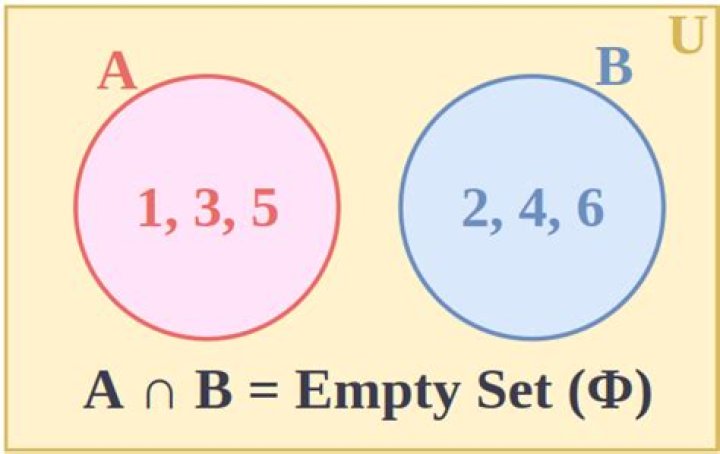
Let's suppose that we need to prove a statement of the form $\forall x(x\in A\longrightarrow\phi)$, where $\phi$ is any property (for example when we need to prove that $A\subseteq A\cup B$). Is it really necessary to consider the case when $A=\emptyset$?
I mean deductively we are only concerned when $x\in A$ is true. This means that we can directly consider the fact $x\in A$ as true and then deduce $\phi$ and we don't care about the case $A=\emptyset$ so we can forget about it. But then I'm confused here becase I've read in some books and seen some of my teachers saying something like
"if $A=\emptyset$ then the case is trivialy true because.... Let's now suppose that $\exists x\in A$, then....".
In the case of my example I would simply write something like:
Let's suppose an arbitrary $x$ such that $x\in A$. Then $x\in A \vee x \in B$. This means $x\in A\cup B$, by definition. Therefore $\forall x(x\in A\longrightarrow x\in A\cup B)$, which means $A\subseteq A\cup B$.
So, my question here is if my proof is really complete or if I'm missing the case when $A=\emptyset$.
In a more general case I can think of proving somegthing of the form $\forall x(\phi\longrightarrow \psi)$. Then I would just write as a proof by using deduction something like
"Let's suppose an arbitrary $x$ such that $\phi$ then... but this implies that... therefore $\psi$. This means $\forall x(\phi\longrightarrow \psi)$".
But here I don't know if I have to consider the case when $\phi $ is not satisfied by $x$ and mention that in the proof to be complete.
$\endgroup$ 31 Answer
$\begingroup$If you want to prove a statement of the form
$$\forall x: \quad (\Phi(x) \Rightarrow \Psi(x))$$
You can assume $x$ with $\Phi(x)$ to exist; in other words you need not require
$$\{x : \Phi(x)\} \neq \emptyset$$
for the proof. (So all statements hold for the elements of the empty set ;-) )
However
If you want to prove
$$\Psi(A)$$
for some set $A$ and want to use an element $x\in A$ for the proof, you first need to show that
$$A \neq \emptyset$$
or make a branch for this as a special case.