Lenovo Legion 5 - Several problems while trying to use Ubuntu
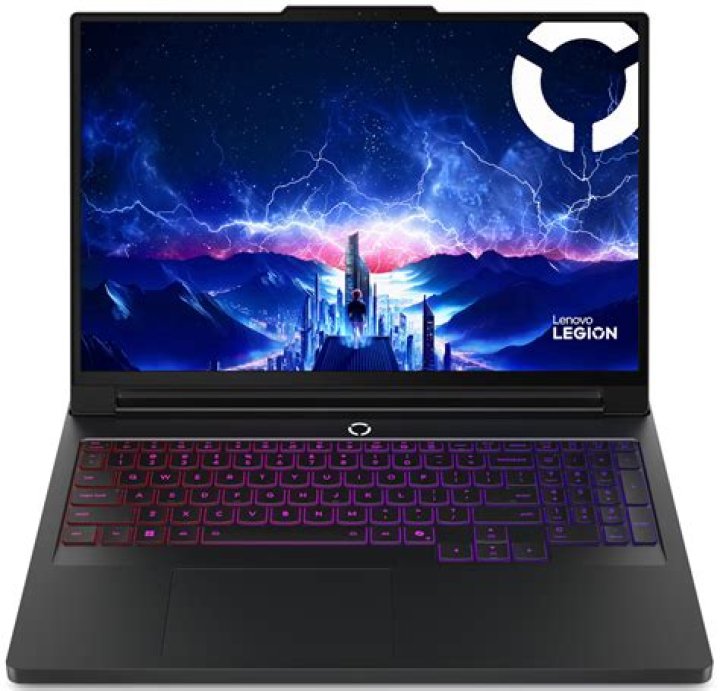
I know that parts of this question were asked before, however, none of the questions featured all problems that I have encountered and the answers were rather unhelpful in my case. I tried to install Ubuntu on my Legion 5 17" with a 1660ti and a Ryzen 7 4800H. The problems I encountered were:
I can't find any alternative to Lenovo Vantage. You might say it is a bad product, but I actually use it quite a lot. E.g. the feature to turn on/off the camera (instead of your face, a grey camera is visible in a live video chat to others) is not working.
Once I turned on battery conservation mode in Windows (to charge the battery only to 55-60%), I can't find any way to disable or re-enable it in Linux. TLP also does not work.
The 3 power modes
(red > white > blue)switched by clickingFN+Qdon't actually do anything in Linux but only change the LED on the power button. When analyzing the wattage/power consumption of my hardware, nothing changes. In Windows it clearly does.One big issue I had with the graphics drivers was that I could not change the screen brightness in discrete graphics mode. In hybrid mode however, I could change the screen brightness. Furthermore, plugging in an external monitor via HDMI works with discrete mode, but not with hybrid mode. It's kind of like a dilemma. Either mode has its (dis)advantages. How would I solve the brightness and external monitor issue in both modes?
Update:
After some time I am now back with updated infos, which I hope will help future owners of the Legion 5 (whatever exact model it might be):
As it seems, there is no need for Lenovo Vantage in GNU/Linux in general. The kernel developers added an ideapad kernel module, which contains some files that you can configure to your beliking. This module seems to support a wide variety of Lenovo devices. Have a look here for the GitHub source code. You can find the configuration files under
/sys/bus/platform/drivers/ideapad_acpi/VPC2004:00. Have a look at the several files. Oftentimes you can change the values inside of them from0to1or vice versa.TLP is not needed. Just change the value inside
/sys/bus/platform/drivers/ideapad_acpi/VPC2004:00/conservation_modeto0or1.I am not quite sure if this one works per default. I could hear some fan noises when I changed into the red mode (power mode), but the fan noise disappeared when I changed into white (automatic mode) or blue (silent mode). It seems that this is somehow already integrated in my Ubuntu version (21.10).
This one drove me really crazy, but it turned out that I did not pay attention which Display Manager my Ubuntu session was using. Of course using Wayland will not work with a X11 config file... I changed my session into X11 and added the
Option "RegistryDwords" "EnableBrightnessControl=1"line into the"Device"section of this file:/etc/X11/xorg.conf, which can be created by using the Nvidia X Server settings program. I have been using the discrete graphics mode preset inside the BIOS, and I am able to plug in a second monitor in my HDMI port with no issues.
side note: I still don't know how to fix the brightness issue for non X11 users.
42 Answers
In regards to your 4th question, if you're in "discrete" mode, then create this file:
$ cat /usr/share/X11/xorg.conf.d/21-nvidia-brightness.conf
Section "Device" Identifier "Device0" #Identifier "nvidia" Driver "nvidia" VendorName "NVIDIA Corporation" Option "RegistryDwords" "EnableBrightnessControl=1"
EndSection
You'll then be able to adjust the brightness.
NOTE: On gaming laptops, it is IMPOSSIBLE to run an external monitor if you're running off the iGPU only ("integrated" mode), because the video output ports are hardwired to the Nvidia GPU (gamers demand this as it improves framerates). An external does work for me if I set the GPU to "hybrid" in the BIOS and then use optimus-manager and use the "hybrid" setting.
Late reply, hope the people here have already solved the initial issues. I have a Legion 5 pro, Nvidia 3070 (2021 version). For people with similar devices(or maybe any new laptops with nvidia), here's what I have found till now :
- I have not found any way to change charging(fast, conservation) and power modes(performance, balanced and quiet) without closing linux. For charging I have to change it from from lenovo vantage by logging in to my dual booted windows(If you don't notice any change in charging mode when switching back to linux, you might want to (1)switch your mode in windows and (2)again restarting into windows and then (3)restarting into linux). There are some utility applications like the tpacpi-bat for thinkpads and ideapads, but none that support the legion series. Still searching for this ..
- Many graphic compatibility issues can be solved by having a linux kernel 5.10+(5.13+ tested and recommended). My initial setup had many issues even after updating to kernel 5.13 due to me messing with config files and settings. On a fresh installation of linux without changing or downloading updates, I first updated my kernel to 5.13. (I am running linux mint 20.3). I updated the linux kernel from "Update Manager">"View">"Linux Kernels". linux kernel options screenshot)
- After the kernel update, I installed the latest recommended nvidia-driver (proprietary) from "Driver Manager". I am currently using nvidia-driver-510. This should also download Nvidia X Server Settings automatically, and provide Nvidia Optimus as a panel(taskbar) icon. Using Optimus from here allows me to change between basically using the integrated gpu(power saving), discrete gpu(performance) or both(nvidia on demand). But this requires you to restart. To be able to see the "Nvidia On Demand" option in Nvidia optimus, you need to change into "Dynamic graphics" from bios
- Using the Nvidia on Demand option fixed my uncontrollable brightness, and desktop scaling issues (Note: you will still face many apps that don't follow the desktop scaling settings. Most can be solved by simple Googling). This is the best option in my opinion as it allows to run basic applications on my Amd iGPU. For specific applications we can use a terminal command(Google primus while launching an application or the "Run with Nvidia Gpu" option while right clicking on an executable program.
Note: You may face not being able to change refresh rate of monitor on linux while in Dynamic graphics mode. I think there is a solution to it, but I haven't checked yet. (I am content for now with 60 fps on linux, I can always game on Windows. Another user reported being stuck on 144 fps. Roll your luck :) )
Also if you are someone who is looking into whether or not you could afford to dual boot linux: Don't worry for your data on windows. You can shrink a partition through tools like AOMEI. Regarding storage, you can keep media, documents, installers in your windows storage and not allot a lot of storage to linux as it you access your windows folders from within linux.
2