Formulas for calculating flux
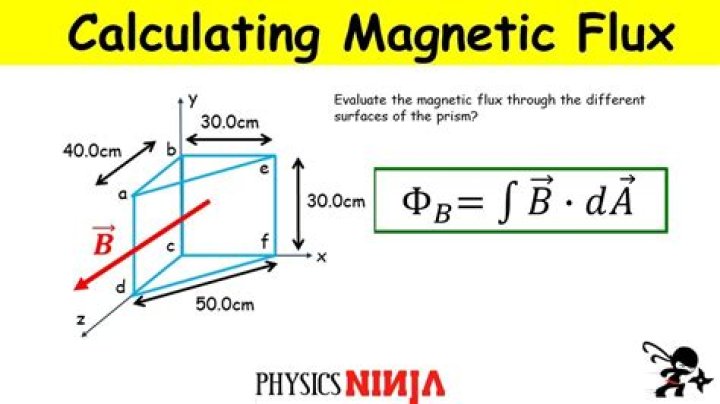
To calculate flux through a surface we can use the formula $$\int \int_S \textbf F \cdot (T_u \times T_v) dA$$
However using Stokes' Theorem we can also calculate flux using $$\int \int_S (\nabla \times \textbf F) \cdot d \textbf S $$
These are not equal because $$\int \int_S \textbf F \cdot (T_u \times T_v) dA = \int \int _S \textbf F \cdot d \textbf S$$
How come both formulas calculate flux but are not equal to each other?
$\endgroup$ 41 Answer
$\begingroup$Here's the basic outline of the thing's we've been discussing:
Flux: $\displaystyle \iint_S \mathbf F \cdot d\mathbf S= \iint_S \mathbf F \cdot \mathbf n \ dS $ (This is a specific example of a surface integral where f is a vector field, i.e., the surface integral of F over S.)
Surface Integral: It's an extension of the double integral over a 2D region to an integral over a 2D surface in 3D. It's any integral that's integrated with respect to a surface. That is, $\displaystyle \iint_S f(x,y,z) \ dS $ where $dS = \| \mathbf n\| \ dA$ and $\| \mathbf n\| = \| T_u \times T_v \|$ for parametrized functions.
Flux Integral: Another name for surface integral.
Stokes' Theorem: It relates a surface integral (but a surface integral that is not flux) of a surface, to the line integral of its boundary. Formally, $\displaystyle \int_{\partial S} \mathbf F(x,y,z) \cdot d\mathbf r= \iint_S (\nabla \times \mathbf F) \cdot \mathbf n \ dS$. So when the questions ask you to calculate the flux integral using Stokes' Theorem it wants you to use the theorem to evaluate the surface integral, and not the flux.
So to formally answer your question above, your first and third formulas are valid methods of expressing and computing flux (a type of surface integral), but Stokes' Theorem relates a surface integral of curl to a line integral, not flux.
Just as a sidebar, I'd stay away from the term "flux integral" because it's confusing and can be replaced with the less confusing "surface integral" (although "flux integral" probably arose from the fact that flux is a type of surface integral...)
$\endgroup$ 1